
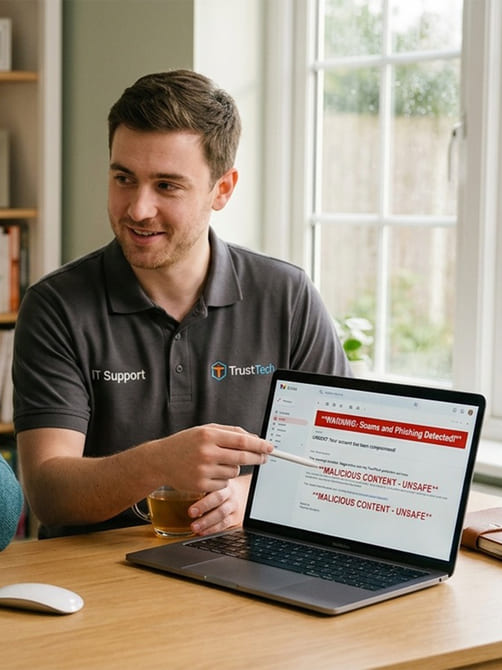
Online Safety & Scam Awareness
Protect yourself from online scams and fraud with clear, easy-to-follow advice. Our Scam Awareness sessions teach you to recognise threats, understand online risks, and use technology safely—so you can browse, communicate, and shop online with confidence.
Scam Awareness
Worried About Online Scams?
Scammers are clever, persistent, and target people of all ages — including my own family

With our Online Safety guidance, you'll:
- Understand common scams and phishing attempts
- Know how to verify suspicious messages or emails
- Protect personal information and accounts
- Feel confident helping friends or family stay safe online
Understanding The Threat
Online scams have become increasingly sophisticated. Fraudulent emails, fake text messages, convincing phone calls, and social media impersonation scams are now part of everyday digital life. Criminals often disguise themselves as trusted organisations such as banks, delivery companies, government departments, or technology providers in order to trick people into revealing sensitive information.
These scams don't only target businesses or technology experts — they target everyday people. Many scams are designed to create urgency or fear, encouraging victims to click links, download attachments, or share personal information before they have time to think.
I've personally encountered multiple scam attempts targeting both myself and members of my family. From convincing phishing emails to suspicious phone calls pretending to be technical support, these experiences highlighted just how realistic online scams can appear.
The good news is that recognising scams becomes much easier once you understand the common warning signs. With the right knowledge and a few simple habits, anyone can dramatically reduce their risk and protect their personal information online.
Through practical demonstrations, real-world examples, and step-by-step guidance, I help individuals and families understand how scams work, how to verify suspicious messages, and how to stay safe in an increasingly connected world.
The Skills You'll Gain
Hands-on, confidence-building abilities to navigate online safely
Online scams continue to evolve, becoming more convincing and harder to spot. By learning the key skills to recognise and avoid scams, you can protect yourself and your loved ones from falling victim to fraud. Our sessions focus on practical, real-world examples that build confidence in identifying suspicious messages, verifying senders, and taking safe actions online.

Recognise Phishing & Fraud Emails
Phishing emails are one of the most common forms of online fraud. In this session, you'll learn how scammers disguise emails to look like trusted organisations such as banks, online stores, or delivery companies. We explain how to recognise suspicious links, fake sender addresses, urgent language, and malicious attachments so you can avoid accidentally exposing personal information or downloading harmful software.

Spot Text & Social Media Scams
Text message scams (often called 'smishing') and social media fraud are becoming increasingly common. We demonstrate how scammers use fake delivery alerts, prize notifications, impersonated accounts, and urgent messages to trick people into clicking links or sharing personal details. You'll learn how to verify messages, recognise suspicious behaviour, and safely manage unexpected contact online.

Handle Phone & Voice Scams
Phone scams often involve criminals pretending to be from banks, internet providers, government agencies, or technical support companies. These calls may pressure victims into sharing passwords, transferring money, or installing remote access software. We explain how these scams work, the warning signs to watch for, and how to safely respond if you receive a suspicious call.

Protect Your Family & Friends
Many scams spread through families and communities when attackers impersonate trusted contacts or send fraudulent messages from compromised accounts. This session helps you understand how to protect vulnerable family members, recognise suspicious messages from known contacts, and share practical online safety habits that keep everyone safer online.
Our Approach to Online Safety
Helping You Stay Safe, Confident & Informed

Practical, Friendly Support
Online safety education should be practical, supportive, and easy to understand. Our approach focuses on real-world examples, clear explanations, and hands-on demonstrations that help people recognise scams before they cause harm.
Rather than overwhelming you with technical jargon, we explain online threats in simple terms and show you exactly how scammers operate. By understanding their tactics — including phishing emails, fake websites, impersonation scams, and fraudulent phone calls — you can make safer decisions when using technology.
-
Identify Risks
Understand which messages, emails, or calls are likely to be scams before taking any action.
-
Protect Yourself & Loved Ones
Learn how to safeguard your accounts, passwords, and personal details from fraudsters.
-
Hands-On Guidance
Practical exercises and demonstrations to build confidence in spotting and avoiding scams.
-
Ongoing Support
Continuous tips, updates, and follow-up advice to stay secure in an ever-changing digital world.
Every session is tailored to your experience level. Whether you're new to technology or simply want reassurance about suspicious messages, our goal is to build confidence and give you the knowledge needed to protect yourself, your family, and your digital accounts.
Stay Safe Online
Practical guidance and tips to protect yourself, your family and your devices from scams
Personal Scam Advice
One-to-one online safety guidance based on real scam examples. We review suspicious emails, messages, and calls together while explaining the warning signs that indicate potential fraud.
Family & Community Support
Practical guidance designed to help families protect vulnerable members from online scams, phishing attacks, and digital fraud through clear explanations and preventative advice.
Device & Account Guidance
Learn how to secure your devices, online accounts, and digital identity using stronger passwords, security settings, and safe browsing practices.
Online Safety Tips
Understand the most common modern scams, including phishing emails, fake delivery messages, impersonation scams, and fraudulent phone calls.
F.A.Q
Common Questions About Our Scam Awareness Sessions
What are the most common online scams?
Common online scams include phishing emails, fake delivery notifications, impersonation scams pretending to be banks or government organisations, fraudulent phone calls, and fake websites designed to steal personal information.
How can I tell if an email is a scam?
Scam emails often create urgency, ask for personal information, contain suspicious links, or use slightly incorrect email addresses. Learning how to check sender details, links, and message tone can help identify phishing attempts.
What should I do if I receive a suspicious message?
Do not click links or download attachments. Instead, verify the message by contacting the organisation directly using their official website or phone number.
Can scammers target people through text messages?
Yes. SMS phishing, also known as "smishing", involves scammers sending text messages pretending to be delivery companies, banks, or services asking you to click links or confirm details.
How can I protect myself from online scams?
Use strong passwords, enable two-factor authentication, avoid clicking unknown links, verify unexpected requests for information, and keep devices updated with the latest security updates.
Are older adults more likely to be targeted by scams?
Scammers often target vulnerable individuals, including older adults, because they may be less familiar with newer digital threats. Education and awareness significantly reduce the risk.
Can you help me check if a message is a scam?
Yes. During sessions we review real examples of suspicious emails, messages, or calls and explain the warning signs so you can recognise scams in the future.
What should I do if I think I have been scammed?
If you believe you have been scammed, contact your bank immediately, change affected passwords, and report the incident to Action Fraud or the relevant authority.
Do scam awareness sessions include practical examples?
Yes. Sessions include real-life examples of scam emails, fake websites, phishing messages, and phone scams so you can learn how to recognise them in everyday situations.
Can families attend scam awareness sessions together?
Yes. Many families attend together to help protect vulnerable members and learn how to recognise scams as a group.